 Analysis by Gamescozy
MemeMix Challenge: Funny Party is a casual game built around a simple social idea: make a funny sound, let the game judge it, and see how your friends react. I can see the appeal straight away. It is less about mastering a complicated system and more about getting people to join in, take a silly prompt seriously for a few seconds, and laugh at the result. That makes it a natural fit for a relaxed get-together, though it is not the game I would reach for when I want a deep solo challenge.
What the game is like right now
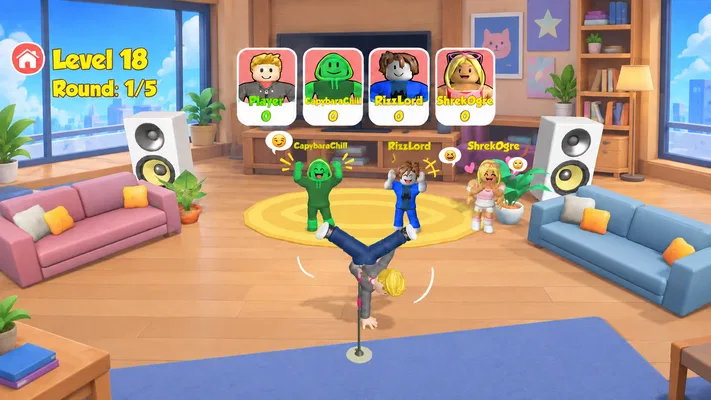
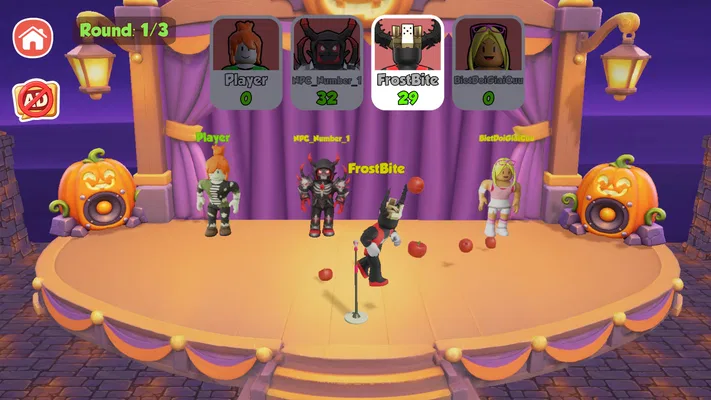
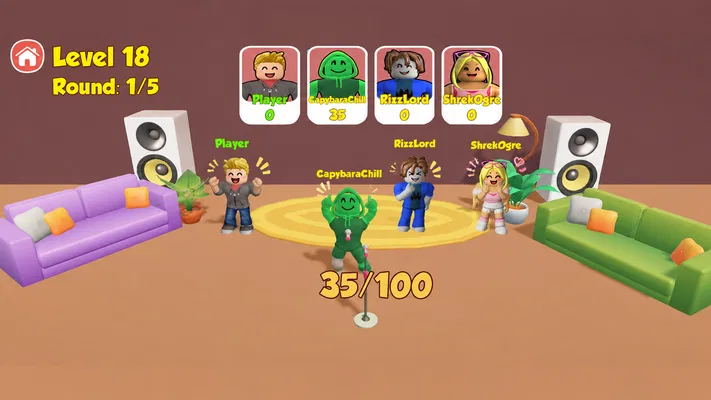
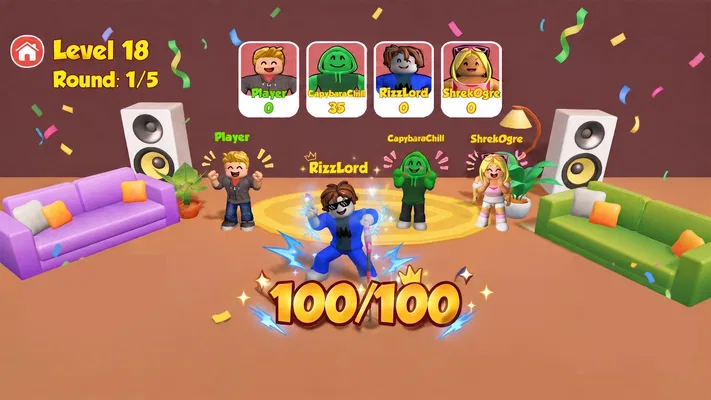
The central attraction is the performance itself. You mimic a sound, receive a score, and use that result as a reason to challenge someone else. That scoring gives the joke a small competitive edge: even if nobody is trying to become a champion, a number gives the group something concrete to compare. I like that this format can turn a quiet moment into a quick shared activity without asking everyone to learn a long rulebook.
It belongs to the casual game category, and that description fits its social, low-commitment premise. The fun depends more on the people playing than on a lengthy progression arc. If your friends are happy to make exaggerated noises in front of one another, the basic idea has room to work. If your group is reserved, playing alone, or uncomfortable performing, the same mechanic may feel awkward rather than funny.
Amobear VN Game Global is the developer, and the current version is 0.0.9. That version number is useful context: it identifies the build available now, but it does not tell me by itself what has changed over time. I would treat this as an early-stage release rather than assume that every rough edge has already been polished away. The game’s main promise is easy to understand; the longer-term question is how much variety and refinement will surround that core.
The game is free to download, with optional in-app purchases priced at $1.99 per item. That lowers the barrier to trying it with a group, but I would still check what an optional purchase covers before paying. For a party game, the value depends on whether it meaningfully adds to repeated sessions, not merely on whether it is inexpensive. You should be able to decide whether the basic experience suits your group before spending.
Why the scoring matters more than it first seems
A score can make an impression-based activity easier to run. Without one, players may end up debating whose imitation was funniest; with one, the game supplies a result that can prompt friendly teasing or a rematch. The trade-off is that a score is not the same as an objective measure of comic talent. I would treat it as part of the entertainment, not a verdict on who performed best.
A useful way to keep the mood light is to agree on the point of the challenge before starting: the highest result can win, or the most entertaining attempt can get the group’s vote. That small distinction prevents the game from becoming frustrating if someone feels their performance deserved a different score. It also lets shy players participate as judges or cheerleaders rather than forcing everyone to perform every time.
Where it fits into a real day
Picture friends waiting for food to arrive or taking a break between other activities. A sound-mimic challenge can fill that pause because each turn is naturally short and the premise needs little explanation. I would keep the phone with one person and invite others to take turns, rather than turning the whole gathering into a prolonged competition. That makes it easier for newcomers to join and for anyone who is not in the mood to sit a round out.
It could also work as a small icebreaker among people who already feel comfortable being playful. It is a less suitable choice for a quiet café, a shared office, or a late-night setting where making noises would bother others. The same feature that gives the game its party energy is also its practical limitation: it asks players to be audible and a little uninhibited.
Compared with familiar casual games that focus on matching, tapping, or solving small puzzles, this one puts the player’s own performance at the center. That makes it more personal and potentially funnier in a group, but less dependable as a private pastime. A puzzle can entertain you even when nobody else is around; this kind of challenge gains much of its character from reactions, comparison, and shared embarrassment.
How to get more from a short session
One helpful approach is to set a loose time limit for the activity rather than trying to keep it going indefinitely. The premise is immediately understandable, so it can make a strong opening round, but repeating the same kind of performance without variety may wear thin. Treating it as a quick interlude keeps the energy high and leaves people wanting another turn later instead of making the game carry the whole gathering.
Another practical tip is to choose the audience before you start. A close group of friends may enjoy deliberately ridiculous attempts, while a mixed group of acquaintances might prefer a gentler, no-pressure round. Letting people pass without explanation is sensible; social games work best when participation feels invited rather than demanded. This is especially important for anyone who dislikes being scored in front of others.
For a fairer-feeling contest, rotate who goes first and avoid treating a single score as the final ranking. Different people may interpret a sound differently, and the group’s sense of humor can matter as much as the result. A casual “best of the round” approach is more likely to preserve the joke than a strict tournament structure. This is a game I would use to spark conversation, not to settle a serious competition.
Who is likely to enjoy it—and who may not
I would recommend giving it a try if you want a lightweight group activity that does not require a shared hobby or much preparation. The concept is clear enough to explain in a sentence, and the scoring gives the group an easy prompt for banter. It may be particularly appealing to friends who already enjoy impressions, sound effects, or playful challenges.
I would skip it if you are looking for a substantial solo game, a carefully skill-balanced contest, or a quiet experience you can play without drawing attention. It may also be a poor match for groups where people dislike performing or being evaluated. In those situations, a conventional puzzle or a game based on private choices is likely to be more comfortable and dependable.
The age rating is Everyone, so the stated content rating presents it as suitable for a broad audience. That does not mean every group will find the performance premise equally comfortable; social confidence varies at any age. The game is free to start, but optional purchases are worth considering only after you know the base activity is something your group will actually return to.
What the current release tells existing players
At version 0.0.9, the clearest confirmed point about the product’s evolution is simply which version is current. I would not infer a particular new mode, feature, or overhaul from that number. Existing players should therefore judge it by the experience they can access now, while keeping expectations about future additions separate from what is already present.
The game was released on September 18, 2026. For someone who has already installed it, the practical question is whether the current build remains enjoyable with the people they play with, rather than whether a version label promises a certain direction. For a new player, the low-commitment format makes it reasonable to test the basic social appeal first and decide later whether it earns a regular place in a group’s rotation.
It has a 4.3 average rating from around 3,500 ratings, with about 59 written reviews, and has passed 5 million installs. Those figures suggest that many people have tried it, while written reviews remain a smaller pool of individual commentary. I would use the rating as a broad signal of reception, not as proof that the game will suit a particular friend group; its success depends heavily on whether people enjoy the central performance loop.
What I would keep an eye on
The most important thing to watch is whether the game’s core challenge stays fresh across repeat sessions. A simple premise is a strength when a group wants instant fun, but it can also become repetitive if players run out of reasons to try again. I would look for clear signs of meaningful variety in the experience itself before assuming that repeated play will feel different from the first session.
I would also pay attention to how optional purchases affect the experience before buying anything. At $1.99 per item, the price is easy to understand, but cost alone does not establish value. If a purchase does not solve a real problem for your group or add something you will use, there is no reason to spend simply because the option appears in the game.
There is a broader trade-off here: the more the game leans on spontaneous performance, the more its appeal will depend on the room. That can make each gathering feel personal, but it means the same game may be a hit one evening and a nonstarter the next. I would keep it alongside other party activities rather than rely on it as the only plan, especially when guests do not know one another well.
Overall, MemeMix Challenge: Funny Party has a clear niche: it turns sound imitation into a short, score-based social challenge. I like the immediacy and the way a result can give friends something to joke about, but I would not mistake that simplicity for guaranteed replay value. Try it with a group that is comfortable being a little silly, keep the first session brief, and let people participate at their own pace. If you want a private, deep, or consistently skill-driven game, a different casual option will serve you better.